



By Surya Raj Acharya
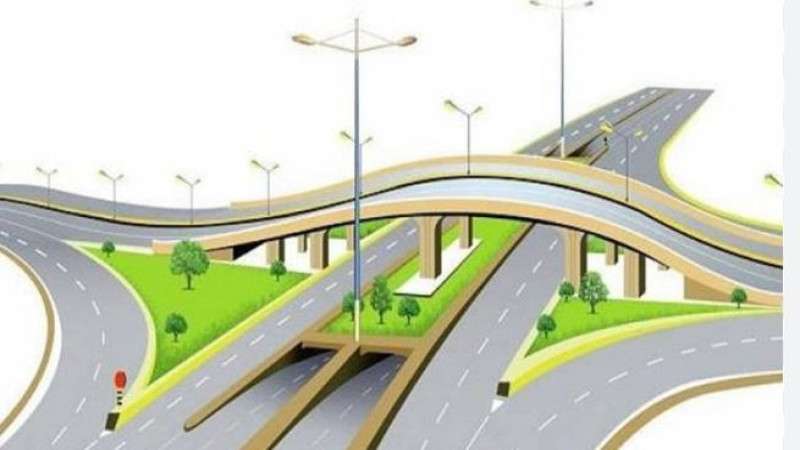
Ad-hoc flyovers and underpasses will not provide a sustainable solution to Kathmandu’s traffic congestion. Without the construction of a metro rail system, Kathmandu’s urban transport problem is certain to become unmanageable.
My suggestion: As shown on the map, the plan for three metro routes—north–south, east–west, and the Ring Road—should be approved by the Cabinet, and the necessary process to immediately begin construction of an elevated metro along the Ring Road should be initiated. Otherwise, we will regret it in the future.
- Including both permanent and temporary residents, the total population of the Kathmandu Valley is estimated to be around 3.5 to 4 million. Kathmandu is among the most densely populated capital cities in the world.
- A capital city is not only an administrative or political center; it is also the economic hub of the country. The Kathmandu Valley is additionally extremely important from cultural, historical, and archaeological perspectives. To maintain the vitality and liveliness of such a city, reliable and high-quality transport infrastructure and services are essential.
- In the early stages of urban development, wide roads, safe and spacious sidewalks for pedestrians, organized bus services, and effective traffic management are the main priorities. However, as urban population and incomes increase over time, the use of private vehicles rises, and roads become unable to handle the traffic load. In such circumstances, elevated or underground metro rail systems become inevitable in large and medium-sized cities.
- In many capital cities around the world, 15–25 percent of the total urban land area is allocated to roads. Main roads are generally 12–14 lanes wide. In some Asian capitals such as Bangkok and Jakarta, this proportion is less than 10 percent, which has resulted in severe traffic congestion alongside economic growth.
- In the Kathmandu Valley, roads occupy less than 5 percent of the total area—one of the lowest proportions among capital cities worldwide. The widest roads in the valley are currently only six lanes wide (the Ring Road and the Kathmandu–Bhaktapur road).
- If Kathmandu’s road structure and growing traffic problems are not addressed immediately, congestion will become extremely severe in the near future. However, government plans and policy-making do not adequately reflect the seriousness of this issue.
- The effectiveness of an urban transport system depends on its overall design, operation, and management. Considering the construction of a flyover at a single intersection or improving one segment as a sustainable “solution” is a mistake. The effectiveness of flyovers may be limited to merely shifting congestion from one junction to another. Therefore, further delay in the planned and comprehensive improvement of Kathmandu Valley’s urban transport system is unacceptable.
- The first step in such a planned improvement is to approve the metro rail project for Kathmandu and immediately move forward with construction. We must not remain under the illusion that piecemeal measures such as flyovers or “large buses” will solve the problem.
- Discussions on the Kathmandu metro rail have been ongoing for several years. Various donor agencies have conducted studies, yet there has been no significant progress—even in project preparation, let alone construction. One reason is the lack of sufficient knowledge and experience in urban transport, particularly metro rail systems, within government agencies. Because government institutions lack the capacity to guide donor-led studies, confusion persists even at the study stage.
- In the immediate term, the government can make a policy decision to prioritize three metro routes in the Kathmandu Valley—north–south, east–west, and the Ring Road, and begin work accordingly. Elevated metro construction along the Ring Road is still feasible at present. If delayed, underground construction will become necessary, which will be extremely costly. These three lines are sufficient for the first phase, and their cost is not unmanageable. However, special attention must be paid to designing and operating the system in a cost-effective manner.
- Flyovers and underpasses constructed at intersections without a metro rail plan may become obstacles to future metro rail development. Government agencies should pay timely attention to this issue.
By constructing these three metro routes and adopting a policy of high-density urban development (Transit-Oriented Development) around metro stations, a large portion of the Kathmandu Valley’s population can be concentrated along these corridors, ensuring reliable and sustainable urban transport.











Comments:
Leave a Reply