



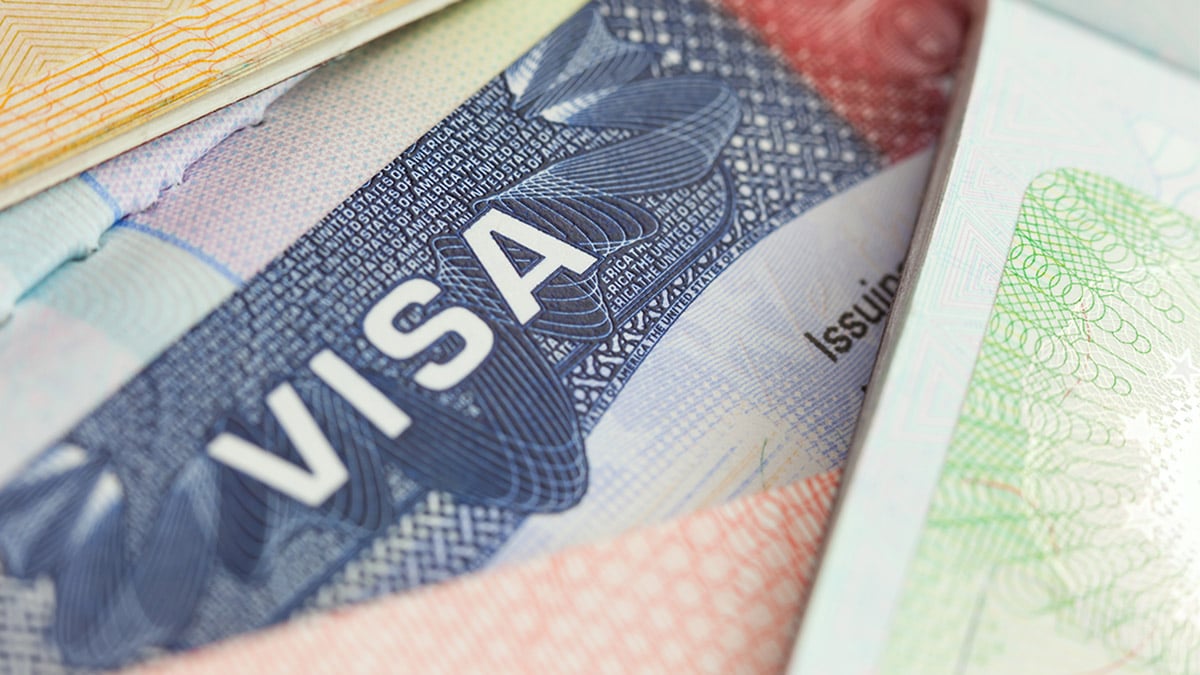
Nepalis will now have to pay a deposit upfront to obtain US business (B1) and visitor (B2) visas.
The US State Department has announced that this rule will take effect from January 21, 2026. Under this regulation, holders of these visas can stay in the US for a maximum of six months. However, not every applicant will be required to pay the deposit.
During the visa interview, embassy officials may require the applicant to deposit $5,000 (approx. NPR 722,000), $10,000 (approx. NPR 1,444,000), or $15,000 (approx. NPR 2,166,000).
The deposited amount must be submitted through a form provided by the US Immigration and Customs Enforcement (ICE). The visa applicant must pay the amount personally; it cannot be paid via a third-party website. If a person stays in the US longer than permitted, the deposited money may be forfeited.
The applicant’s return date will be recorded upon entry to the US. The deposit will be refunded once the person leaves the US and returns home. The money will also be refunded if the visa holder does not travel, or if a visa application is submitted but the applicant is turned back at the airport, according to the US consular office.
However, paying the deposit does not guarantee visa issuance. The consular officer must approve the deposit; any deposit made without their instruction will not be refunded. Furthermore, if a person enters the US on a business or travel visa and later applies for a different visa type or seeks asylum, the deposit will be confiscated.
Entry Limited to Three Airports
Along with the deposit requirement, Nepalis traveling to the US on these visas will be allowed to enter only through designated airports. Similarly, they must depart the US through these specified airports.
The US has designated three international airports for such visa holders: Boston Logan International Airport (Boston), John F. Kennedy International Airport (New York), and Dulles International Airport (Washington, D.C.). Travelers attempting entry or exit through other airports may be detained by US authorities.





Comments:
Leave a Reply