




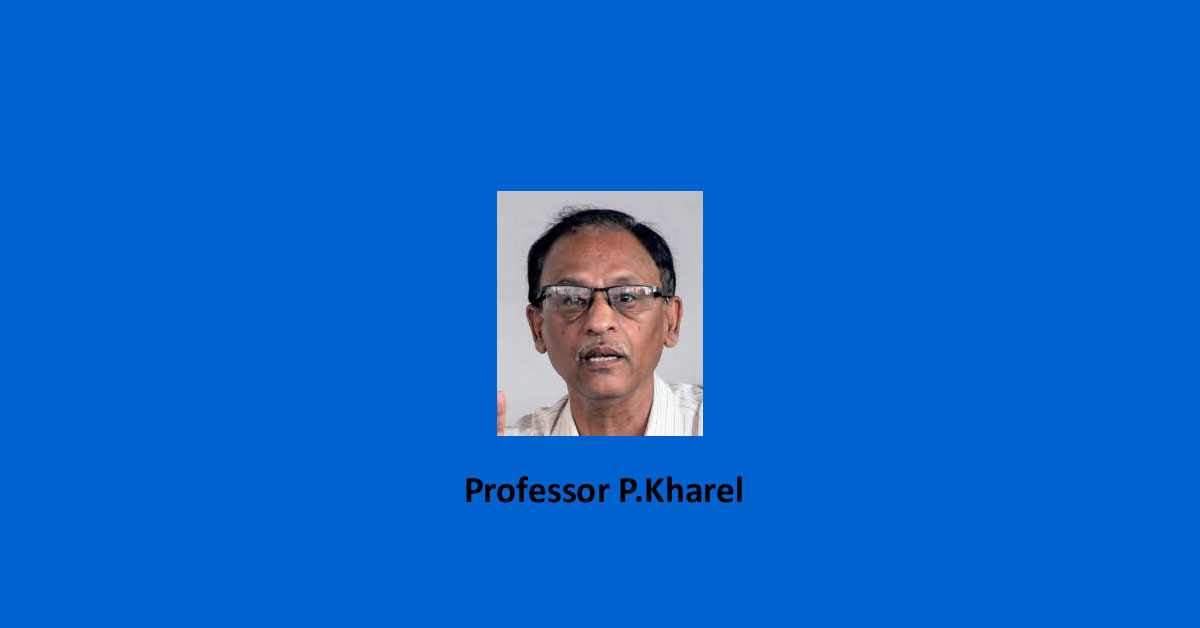
By P Kharel
Security officials at Chinese immigration detained an Indian transit passenger for several questioning her over the passport she carried on way to Europe, the intended destination in November. The woman was reprimanded for holding a fake passport that showed her place of birth as Arunachal Pradesh, which Beijing calls Southern Tibet and part of China.
The implication was that anyone from Arunachal Pradesh should carry Chinese and not any other country’s passport. The area spreads over more than 83,000 sq km. More than a decade ago, India official team visiting Beijing noticed that one of its members did not have his visa issued. On query, the Chinese embassy staff at New Delhi’s the Chanakyapuri diplomatic enclave responded without batting an eyelid: “He is from Arunachal Pradesh, he does not require a visa to enter China.” The implication was cuttingly clear.
Recently, when an athlete from Arunachal Pradesh was treated likewise, the Indian stuck to their gun. As the hosts, the Chinese issued a visa paper stapled in the passport. During the athlete’s exit at the immigration, however, the stapled paper was neatly stripped away, as if he never had a Chinese visa, being born in Chinese territory.
There’s nothing to gloat over India’s setbacks to the envisaged dream of recognition as a global power and indisputably an Asian power of reckoning. When a regional power flexes its muscles over dubious or illegitimate claim, flashpoints develop, whose long-term costs might not be easily calculated.
DUBIOUS DRIVE: India’s new parliamentary building two years ago portrayed a map showing much of South Asia obliquely as part of Akahnd Bharat. In response to press queries, Prime Minister Narendra Modi was unconvincing when he defended it as a cultural map. The words sounded innocuous but their tone was far from so.
India has had border issues with all its neighbors sharing contiguous borders, that is, Nepal, China, Pakistan and Bangladesh. Its army has entered most other South Asian countries on different occasions and in different pretexts from the 1960s through the next several decades right up to the 2020s.
New Delhi claims the Himalayan nation’s Lipulek, Limpiyadhura and Kalapani along the border with China’s Tibet autonomous region. Indian military has been occupying Lipulek.
India arranges for the Dalai Lama’s Dharmashala security while the United States bears the lion’s share of funding the government-in-exile. Some European capitals also chip in additional support. The Marichman Singh Shrestha government in Nepal in 1988 allowed the Dalai to visit Lumbini, the birthplace of Lord Buddha for an hour and a half from the time the Tibetan spiritual figure entered Nepal’s border in Rupandehi. When the visitor overstayed by about an hour, the hosts did not press with a strict deadline.
Encouraged by the Lumbini trip, even if a quiet one, and emboldened by Nepal’s political change in 1990, the Dalai team tried convincing the interim government headed by Krishna Prasad Bhattarai to allow him to pay respects to Swayambhunath and Bouddhanath in Kathmandu and enable his lifelong dream fulfilled.
NO TIME OR CLIME: Tipped off by a well-placed source of the impending visit, this scribe wrote an article in The Rising Nepal, the kingdom’s then largest circulating English daily, with the headline “Neither The Time Nor The Clime”. Lo and behold, the visit was cancelled at the last moment when King Birendra read the article and drew Bhattarai’s attention on its sensitive nature via-a-vis China.
As a result, Bhattarai ruefully informed the Dharmashala about the “unnecessary” problem it might create with the Chinese. A day after the article was published, The Rising Nepal’s chief editor Shyam Bahadur KC had a chance meeting with the prime minister who regretted that the said article “created a big difficulty for us”.
Thirty-five years down, the dogged Dharmashala was bent on trying something similar once again. The installation of the Sushila Karki interim cabinet fuelled the Dalai’s hopes of visiting Kathmandu Valley and the intended attendant publicity internationally. His Holiness greeted Karki with an intentionally publicised message of congratulations. It was a first to a Nepalese premier. The Sushila cabinet assessed the situation correctly by not acknowledging it.
Speculation circulated over the Dharmashala exercise being the handiwork of some political forces in the host country and Western funding forces. Tibet is China’s redline. The US wants it breached through proxy wars and political pawns. It sees in India a potential counterweight to China. New Delhi cannot fail to overlook the fact that the 21st century dragon is too powerful and fighting fit to fool around with, let alone brawl with.
AMERICAN INTEREST: What is it that interests the United States the most about Nepal? The strategic significance is in the country’s geography, bordering India’s arch-rival China, the next No. 1 world economy.
Nepal is among China’s 14 neighbors with land borders. New Delhi cannot do anything against China from Nepal. India’s north-east seven sisters are vulnerable to rebel groups and foreign elements gauging the prospects of playing mischief or extracting bargaining chips. The US position is different and could even risk being seen working against the communist country.
Until the turn of the century, India’s Bharatiya Janata Party (BJP) looked positively at Nepal as a banner of the world’s only Hindu Kingdom. Having headed the union government several times, however, BJP’s sister organisations now nurse a rethink. They worry that Nepal as the sole Hindu state would overshadow India’s credentials as the centre of Hindu culture, and a Hindu king would be the cynosure of Hindus all over the world.
India’s concern about Nepal’s political stability is in its own interest. The 2006 political change in Nepal was basically New Delhi’s handiwork during the Congress rule in India. BJP stands to gain by letting Nepal be Nepal in accordance with the latter’s longstanding position as a non-aligned nation maintaining due distance from both the ambitious neighbors.






Comments:
Leave a Reply