




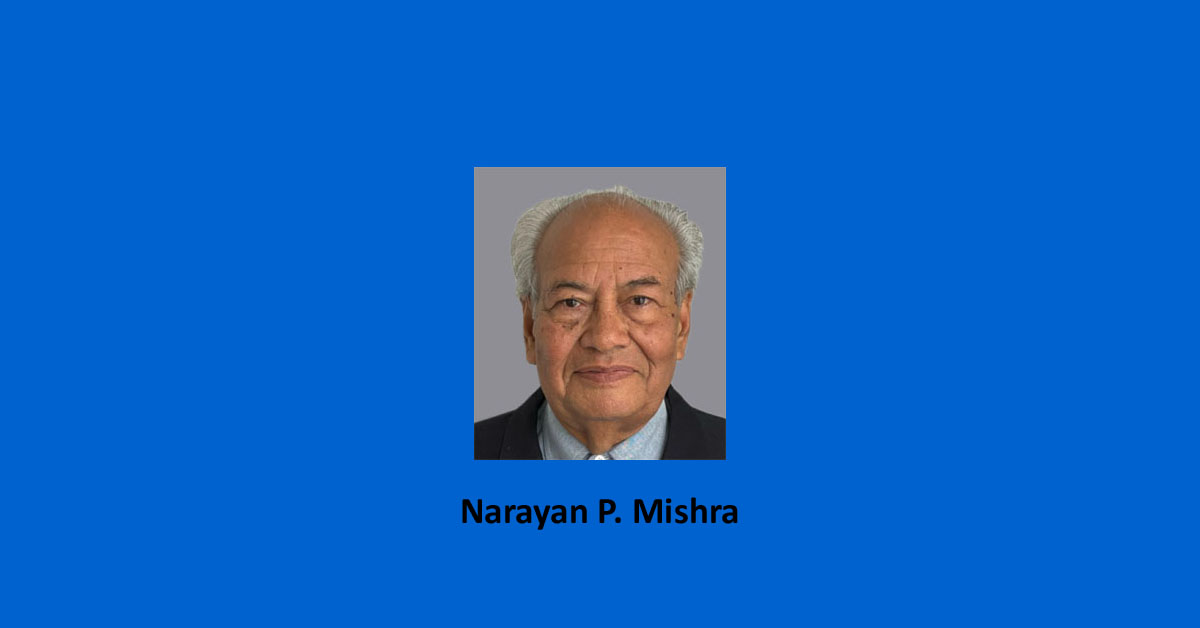
Narayan Prasad Mishra
In the age of YouTube and televised politics, we can see and hear anyone at any time — singers, spiritual masters, world leaders, analysts, and our own political figures. Their voices fill the screens; their speeches fill the air. Some soothe, some inspire, and others merely entertain. Yet behind many of these admirable speeches lie condemnable characters — speakers who say what sounds noble, but live lives that contradict their words.
After eight decades of observing my country’s leaders and administrators, I have learned that in Nepal, truth is often ornamental — displayed in speeches but ignored in deeds. Words of honesty, service, and selflessness echo from pulpits and platforms, but when power arrives, these same words dissolve into self-interest and deceit.
The Art of Beautiful Lies
Decades ago, I wrote a poem titled “Sabai Gyani Nepalmai Hunchha” (“All the Wise Are in Nepal”), published in Naya Nepalpost on March 1, 1985 ( Fagun 18, 2041 ). It was written before the advent of multiparty democracy, long before Nepal became a republic. Even then, I had observed how leaders — prime ministers, ministers, and revolutionaries alike — could speak with the eloquence of Lincoln and the passion of Gandhi, yet fail to follow their own wisdom. Presented here is only the first stanza of the poem, in both Nepali and English.
The poem said it clearly:
सबै ज्ञानी नेपालमै हुन्छ
यो माटोको गुणै यस्तो
यहाँ इमान र बिबेक
भाषणमा मात्र हुन्छ
यहाँ निस्वार्थ र सेवा
बोलाइमा मात्र हुन्छ
All the Wise Are in Nepal
The quality of the soil is such
Here, honesty and right reason
Are found only in speeches.
Here, selflessness and service
Found only in talk.
It was not cynicism — it was truth. Our country has never lacked eloquent orators, but it has always lacked truthful ones. Today, after democracy, republicanism, and countless revolutions, the same faces give the same speeches with new slogans. From hardcore communists to democrats – the wit, humor, and nationalistic flair may differ, but the outcome remains the same. Our politics has become a theatre of words, not a workshop of deeds.
A Nation Where Honesty Is a Curse
Throughout my long years of public service and writing, I have seen how honesty often comes at a cost. My late wife, Shanti Mishra, and I built and served Nepal’s academic institutions with conviction and integrity — she, as Nepal’s first full-time female professor and founder of the Tribhuvan University Central Library; I, as an academic administrator, librarian, and writer who spoke and wrote truth even when it was unwelcome.
However, in a culture that rewards sycophancy and punishes sincerity, truth becomes a form of rebellion. We were sidelined not for failing in our duties but for doing them too well. What we experienced as individuals is what Nepal continues to experience as a nation — where merit is ignored, mediocrity is celebrated, and where the loudest speakers silence the honest workers. One of our former vice-chancellors, who forced the retirement of 22 high officials in the university, is being revered as a top civic society leader and true democrat, even by the government established following Gen. Z’s revolt.
Bureaucracy Without Conscience
On 22, 1982 ( B.S. Aashwin 6, 2039 ), I wrote a poem titled “Yasaile Yahaa Yestai Chha” (“That is How It is Here” ), published in Naya Karent, describing the lethargy, corruption, and hypocrisy that infected government offices. Presented here is only the first stanza of the poem, in both Nepali and English.
यसैले यहाँ यस्तै छ
हिजो पनि, आज पनि
यहाँ यस्तै छ
खाने र खुवाउनेमा
दक्षताको जाँच छ
रक्सी र छोयलामा
मित्रताको नाप छ
चाकडी र चाप्लुसीमा
विश्वासको छाप छ
नाता र नजरानामा
योग्यताको राप छ
हिजो पनि, आज पनि
यहाँ यस्तै छ







Comments:
Leave a Reply