




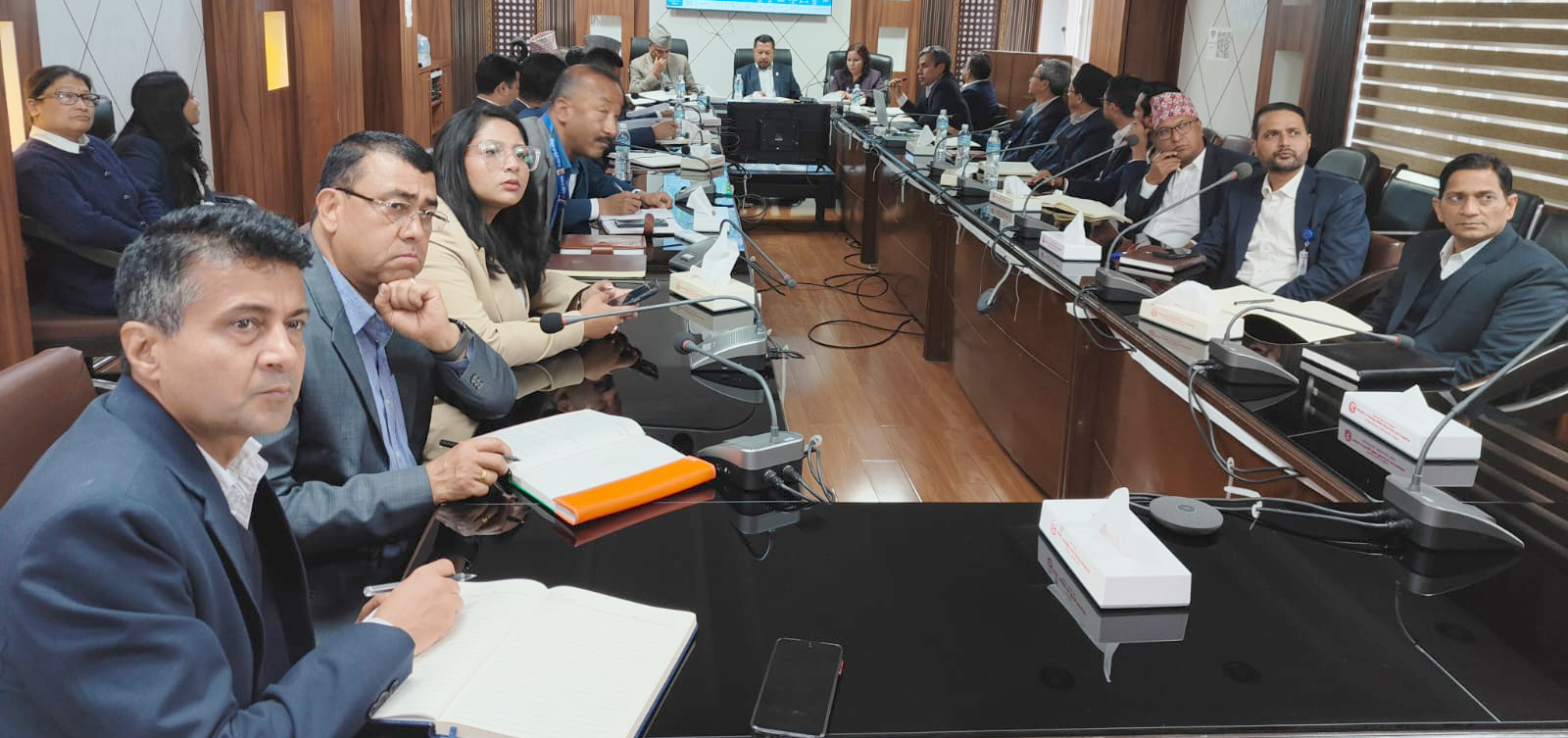
Kathmandu, March 30: The long-closed Power Purchase Agreement (PPA) will soon be opened under the new administration. The intention to launch the PPA is part of the government led by Balendra Shah’s 100 agenda items on governance reform.
According to the announcement, pending PPAs that haven’t been regularised over the previous seven years—that is, since 2075 BS—will be opened in no more than 180 days.
The list states that all pending power purchase agreements (PPAs) and license decisions will be made within a maximum of 180 days, and the energy export strategy will be prepared within a month. The goal is to ensure rapid development by promptly removing obstacles related to electricity generation, transmission, distribution, and export to develop the nation’s energy sector as the primary foundation for economic transformation.
In a similar vein, it states that the strategy of concentrating electricity exports on markets with high prices (particularly during evening peak hours) will be implemented right away; a roadmap for structural reform of the Nepal Electricity Authority will be prepared and the implementation process will be started right away; and a multifaceted financial structure (government, private, foreign, and diaspora investment) will be developed to manage the long-term financial resources of the energy sector.
Furthermore, it has been stated that the relevant agencies will establish a precise timeline for the execution of these measures. The last time, a 1,500 MW PPA for run-of-river projects in Falgun 2079 was opened by Rajendra Lingden, the Energy Minister at the time.
In a similar vein, the 963rd meeting of the NEA Board of Directors in Magh 2080 determined to enter into PPAs with run-of-river (ROR) and semi-reservoir (PROR) hydropower projects up to 10 MW whenever and however much.
However, then-Finance Minister Bishnu Prasad Poudel included a clause to change the PPA system from “take or pay” to “take and pay” in the budget for the current fiscal year. PPAs up to 10 MW have also stopped as a result.
On Jestha 25, the Nepal Electricity Authority wrote a letter asking hydropower projects that had already signed a connection agreement to provide information within four days. In order to create a list for the PPA based on priority, the NEA has written to 51 hydropower projects requesting information.
Executive Director Hitendra Dev Shakya established a committee on the 20th of Jestha to prepare the list in accordance with the 994th meeting of the NEA Board of Directors. The committee was coordinated by the Deputy Executive Director of the Electricity Trade Department under the Business Development Directorate.
In a letter to those projects, the committee asked them to provide information within four days and to develop a list of the PPA’s top priorities as soon as possible, along with a report. The NEA opened PPAs for 54 hydropower projects totaling around 5,000 MW over 10 MW through ROR and semi-reservoir PROR based on priority on the 15th of Baisakh. Investors who have sent in all of their paperwork, however, claim that the PPA cannot be completed for ten months.
Investors in hydropower have embraced the government’s 100 action plan. The Independent Power Producers Association of Nepal (IPPAN), which announced the development of the nation’s energy sector as a key pillar of economic transformation and set a deadline for its implementation, has applauded the decision to carry out the 100 Action Plans on Governance Reforms that were made public shortly after the new government was formed.
It is stated that the PPA for roughly 13,000 MW of projects that have submitted an application to the NEA will be finished in a minimum of six months. For the remaining projects, the procedure for opening PPA will be established.
In a similar vein, IPPAN requires the private sector to be involved in production as well as transmission, distribution, and export in order to overcome the numerous challenges associated with these areas.
The nation can now generate more than 4,000 MW of electricity. The private sector’s projects have a capacity of over 3,350 MW. The private sector is building projects with a capacity of roughly 5,700 MW. Approximately 13,000 MW of projects have submitted PPA applications. A further 15,000 MW is under investigation. Over Rs. 1.31 trillion has been invested by the private sector in finished, ongoing, and soon-to-be-built projects.
In the name of the action plan’s procedural implementation, Chairman Ganesh Karki stated that steps like a one-door system will make it much simpler for investors to resolve issues they have been dealing with for a long time. The one-door approach will put an end to the years-long process of acquiring land, removing trees, and conducting environmental impact studies, allowing energy investors to make confident investments.







Comments:
Leave a Reply