




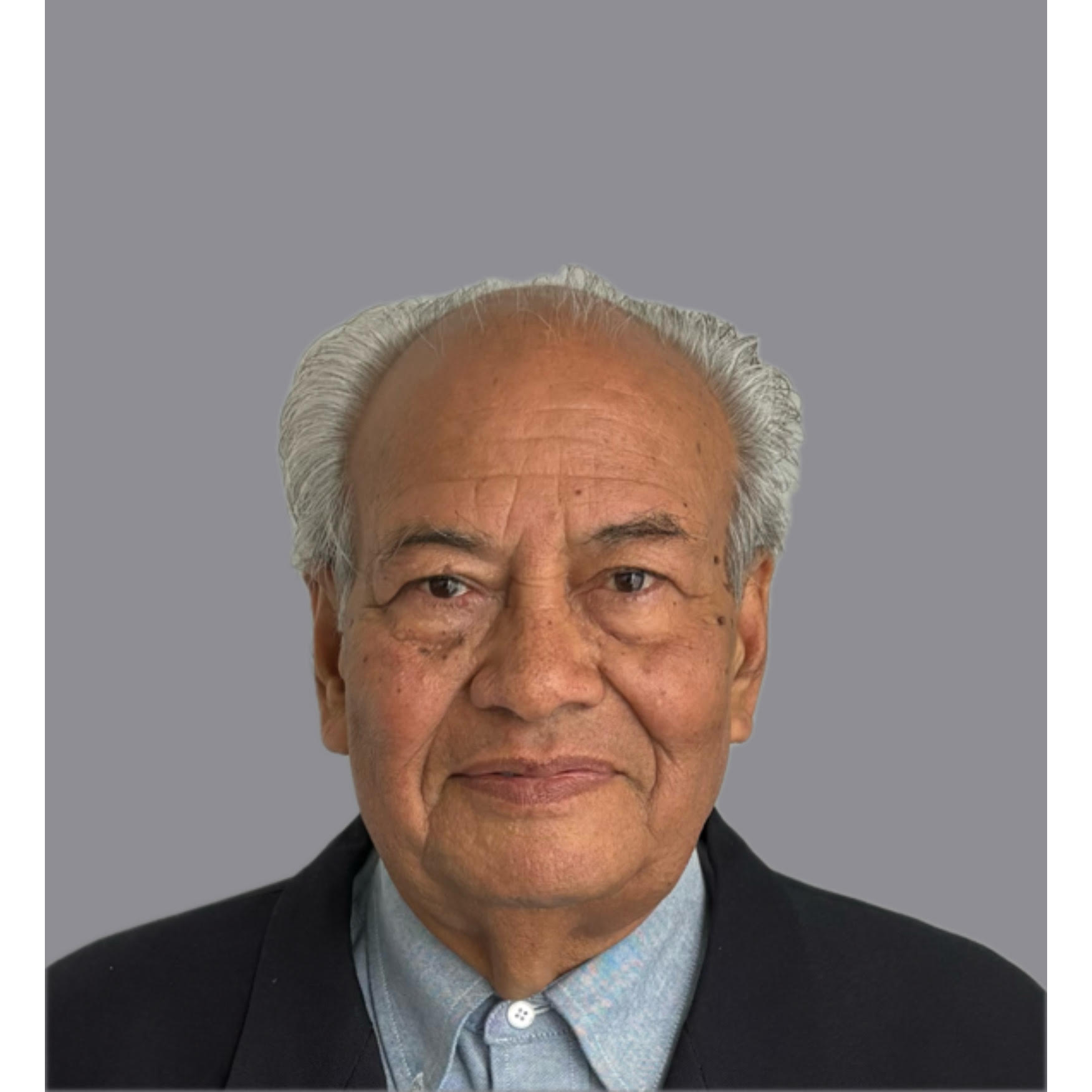
By Narayan Prasad Mishra
Regardless of whether a country has a good or bad political system, if the chief ruler of the nation—that is, the head of government—is honest, moral, intelligent, knowledgeable, enlightened, capable, patriotic, selfless, and loyal to the country and its people, such a person can certainly accomplish remarkable and memorable work for national progress and public welfare. As an example in this context, one may cite the development works and achievements carried out by King Mahendra for the country and its people.
Similarly, in Nepal, since the advent of multiparty democracy in 1990, even after obtaining the system they desired along with extensive power and authority, our political leaders have, for more than three decades, prioritized the welfare of themselves, their relatives, and their close associates over that of the nation and its people. Instead of true democracy, they have practiced party-based authoritarianism and leader-centric rule. This too stands as a clear example in this context. Reflecting on this, it appears that, more than the system itself, what truly matters is that the person operating it be good and principled. Of course, if both the system and its leader are good, it would be like “fragrance added to gold”—everything would indeed turn out well.
On the other hand, if the country’s chief ruler is corrupt, selfish, immoral, deceitful, opportunistic, exploitative, and manipulative, such a person will shape the system and laws accordingly to exploit the nation and its people. Again, Nepal’s multiparty history since 1990 provides sufficient evidence of this. Our multiparty rulers have indeed given the country a constitution and system that includes a range of democratic and human rights provisions. However, they have also established mechanisms that allow them to control constitutional bodies, judicial institutions, anti-corruption agencies, courts, educational institutions, hospitals, ministries, departments, and other offices—ensuring that whatever corruption they commit goes unpunished. In contrast, they can inflict injustice upon others at will. They have also proved themselves to be responsible figures in the practice and establishment of corruption and Misgovernance in the country.
As a result, it has become common knowledge that corruption cases can be opened or ignored at will; files can be hidden or suppressed; charges may or may not be filed; and even filed cases can be withdrawn arbitrarily.
In such a context, when both the President and the Prime Minister belong to the same political party—undermining the necessary checks and balances of power—it creates a situation where, in matters concerning the nation and its people, there is a mindset that “once you and I agree, who can challenge us?” Under such conditions, there have even been reports and concerns that certain ordinances have been issued through collusion. Considering all this, it would not be an exaggeration to say that the nationwide mass protests of September 8 and 9, 2025 (Bhadra 23 and 24, 2082) resembled a painful storm or tsunami—an outpouring of public anger against widespread corruption, irregularities, dishonesty, oppression, exploitation, and plunder.
Following this period, the interim government led by Sushila Karki, the former Chief Justice, was unable to accomplish any significant or memorable work that the people expected to establish good governance, either by changing the constitution, rules, or regulations, or by taking bold action in practice. However, the general elections held during this period produced an unexpected outcome: like faces disfigured by smallpox, all the political parties—tainted and discredited by their own misdeeds and poor governance—were cast aside by the people, and the Rastriya Swatantra Party emerged as a major force with overwhelming support. This is the very party that advocates improving conditions without changing the system.
From a general perspective, however, it appears difficult to improve conditions without changing harmful systems and procedures, no matter how capable the leader may be. One can ride a bicycle on a narrow trail, but if a large rock blocks the path, it must be removed first. Similarly, cars and trucks require roads of adequate width, and airplanes require proper runways. No matter how intelligent or determined one claims to be, an airplane cannot be flown from a small courtyard. In the same way, attempting to improve conditions without reforming the system is often unrealistic.
For instance, as long as universities and colleges continue to allow party-affiliated student unions and organizations, or appoint partisan leaders as vice-chancellors, rectors, and registrars, it will be difficult to end the politicization of educational institutions. Likewise, as long as political employee unions exist in government offices, banks, departments, ministries, and public institutions, establishing discipline and good governance will remain a challenge. The need to change major forms of governance is, of course, a separate matter—one that involves issues such as a non-partisan head of state, a directly elected prime minister, and a more economical and effective federal structure. It is well known that when both the President and the Prime Minister come from the same party—or are brought together through coalition and collusion—it is akin to having the same person serve as both the shaman and the witch: the one who punishes and the one who delivers justice.
Whether by changing the system or working within it, the great responsibility now rests upon the Rastriya Swatantra Party to control corruption, establish good governance, accelerate national development, and improve the living conditions of the people. There is growing hope among the public that this party and its energetic leaders and members will not repeat the mistakes of previous ruling parties by promoting only their own interests and networks.
At the same time, just as Balen Shah has demonstrated visible achievements in transforming Kathmandu despite immense obstacles, entrenched resistance, and constant pressure, there is a growing hope among the people that, as Prime Minister, he could bring similar transformative change to the nation within his tenure. I extend my sincere best wishes for his success, because the true test of leadership lies not in winning power, but in how that power is used to serve the people.
It would be a profound national tragedy if this government were to fail in delivering tangible development and meaningful improvements in the welfare of the people. Nepal has endured too many unfulfilled promises. The country now stands at a critical moment, where hope must be matched by action. I sincerely pray that this opportunity is not lost.
narayanshanti70@gmail.com






Comments:
Leave a Reply